
How do I keep up with ICD-10, CPT, and HCPCS coding changes?

Updated: Oct 6
Ever thought your practice might be losing money because of a small rule change? In healthcare, keeping up with the latest is essential for your finances.
Staying on top of changes is key to a good revenue cycle plan. By learning how to keep up with icd 10 cpt hcps changes, you can avoid claim denials and keep your practice stable.

Handling coding compliance updates for medical billing needs a clear plan. This guide will help you manage these changes with confidence and accuracy.
Key Takeaways
· Proactive monitoring prevents costly claim denials.
· Regular review of industry shifts ensures financial stability.
· Mastering terminology reduces errors in the revenue cycle.
· Strategic planning helps teams adapt to new requirements quickly.
· Consistent education remains the best defense against audit risks.
Understanding the Lifecycle of Coding Updates
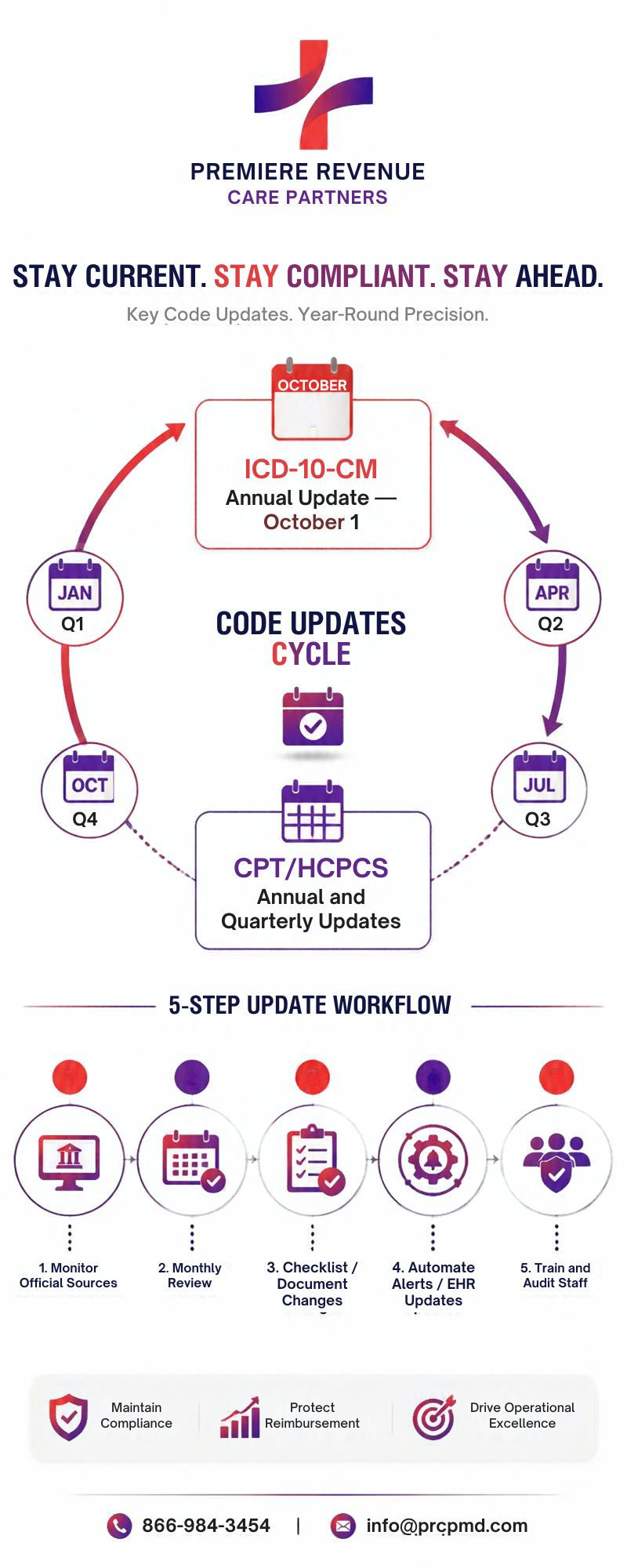
Knowing the lifecycle of coding updates helps practices get ready for changes in how they document and get paid. By understanding this cycle, billing teams can update their systems and train staff early. This is key to keeping up with coding compliance updates for medical billing across the whole team.
The Annual Update Cycle for ICD-10-CM
The ICD-10-CM has a strict annual update cycle. These critical changes happen on October 1st every year. Healthcare providers must update their systems before this date to avoid claim rejections.
The Quarterly and Annual CPT and HCPCS Release Schedules
CPT and HCPCS codes have a different schedule than ICD-10-CM. While big updates come on January 1st, some codes change every quarter. It's important to keep up with these medical coding changes for accurate billing.
Code Set | Primary Update Date | Frequency |
ICD-10-CM | October 1st | Annual |
CPT | January 1st | Annual/Quarterly |
HCPCS | January 1st | Annual/Quarterly |
Why Staying Current is Critical for Revenue Cycle Management
Not following the latest medical billing guidelines can hurt a practice's finances. Using old or wrong codes can cause denied claims and delayed payments. Keeping workflows up to date keeps the revenue cycle healthy and follows federal rules. Staying compliant with coding updates is only one part of maintaining a healthy revenue cycle. Premier Revenue Care Partners also provides financial reporting for healthcare providers to help practices monitor profitability, improve cash flow, and make informed financial decisions.
Establishing a Reliable Source for Coding Compliance Updates for Medical Billing
Having a strong network of information is key to avoiding coding errors and compliance risks. When data is scattered or outdated, the chance of claim denials and audits goes up. By focusing on coding compliance updates for medical billing from the start, administrators can keep their team up-to-date with the latest info.

Monitoring Official CMS and AMA Publications
The Centers for Medicare & Medicaid Services (CMS) and the American Medical Association (AMA) are the top sources for healthcare coding. They publish the main rules for reporting and getting paid for services. It's important for any practice to regularly check these sources for compliance coding updates.
Using these official channels helps avoid misunderstandings that can happen with other sources. Practitioners should mark the CMS website and the AMA CPT knowledge base as favorites. This way, they get the latest news on policy changes directly.
Subscribing to Federal Register Notifications
The Federal Register is the daily journal of the U.S. government, with important info on proposed and final rules. Many billing departments miss out on this resource, but it's a key source for early warnings on regulatory changes. By subscribing to healthcare policy alerts, managers can get ready for new mandates early.
Evaluating Third-Party Coding Newsletters and Alerts
While official sources are essential, third-party newsletters can offer useful context and tips. But not all medical billing compliance news is the same. It's important to check if these providers are credible, how often they update, and their accuracy record.
A good third-party service should always point to its main sources, like CMS transmittals or AMA bulletins. If a newsletter doesn't provide clear sources or useful tips, it might not be right for your compliance plan. Use the table below to check if your current sources are reliable.
Source Type | Reliability Level | Primary Benefit | Frequency |
CMS/AMA Official Portals | Highest | Regulatory Authority | Real-time |
Federal Register | High | Early Rule Warnings | Daily |
Professional Newsletters | Moderate | Practical Application | Weekly/Monthly |
Social Media Forums | Low | Peer Discussion | Variable |
Implementing a Monthly Review Workflow
A monthly workflow makes tracking regulatory updates easier. It turns a big task into a regular routine. Billing managers can then handle medical coding changes smoothly, without stress.

Setting Aside Dedicated Time for Compliance Research
Being consistent is key for a billing team's success. Managers should set aside hours each month for updates. This proactive approach keeps the team ahead of changes.
By focusing on these sessions, staff members lower the chance of claim denials. Time for compliance coding updates lets the practice understand complex info calmly.
Creating a Standardized Checklist for Coding Changes
Even experienced billers can miss something in a busy month. A checklist is a safety net, making sure all new rules are followed. It ensures no important coding updates for healthcare providers are missed.
The checklist should guide steps for checking code validity and new modifiers. Following it keeps all claims accurate.
Documenting Changes for Future Reference
Keeping records is essential for the whole team. When a practice logs how and why a code was used, it builds a knowledge base. This is very helpful for training new staff.
Also, this documentation is a strong defense in audits. It shows the practice's commitment to following rules and being professional.
Leveraging Professional Organizations and Official Resources
Keeping up with the latest medical billing guidelines is easier with the help of professional groups. These organizations connect complex rules to everyday billing tasks. They help practices stay compliant and boost revenue.

Engaging with AAPC and AHIMA Resources
Groups like AAPC and AHIMA offer a lot of knowledge. They give members special access to forums, newsletters, and white papers. These resources make complex rules easy to follow.
Using these platforms, billing pros get deep insights into new rules. These resources are key for coding updates for healthcare providers to keep their work accurate.
Participating in Specialty-Specific Coding Webinars
General updates don't cover the unique needs of each medical field. Specialty webinars offer tailored advice for different areas like cardiology or orthopedics.
· Interactive Q&A sessions with industry experts.
· Case studies showing how to apply healthcare coding updates in real life.
· Downloadable cheat sheets for specific specialty codes.
Utilizing Official CMS Coding Guidance Portals
The Centers for Medicare & Medicaid Services (CMS) has official portals for billing rules. Accessing these portals lets professionals get direct guidance from experts.
These portals are vital for following the latest medical billing guidelines accurately. Relying on official sources reduces the risk of claim denials and audits. It keeps your healthcare coding updates in line with federal rules.
Utilizing Practice Management Software and Clearinghouse Alerts
Automated systems have changed how medical practices handle new billing rules. They use advanced software to keep up with medical billing compliance news easily. These tools help avoid costly mistakes and claim denials.

Configuring Automated Alerts in Billing Software
Most practice management platforms have features for alerts on new rules. Administrators should set these up to alert them of code changes. Proactive configuration helps the billing team stay updated quickly.
Automated alerts help avoid using old codes. This keeps the team in line with current rules from the government and private payers.
Reviewing Clearinghouse Rejection Reports for Coding Trends
Clearinghouse rejection reports are key for spotting coding issues. A sudden increase in denials means a rule change might have been missed. Regular checks help catch problems early.
The table below shows how software helps with compliance:
Feature Type | Primary Benefit | Frequency |
Automated Alerts | Real-time compliance updates | Daily/Weekly |
Rejection Analytics | Pattern identification | Monthly |
EHR Integration | Point-of-care accuracy | Continuous |
Integrating Electronic Health Record (EHR) Updates
Adding medical coding updates for billers to the EHR is key. When the EHR is updated, providers get prompts for the right codes. This makes the workflow smoother and reduces staff stress.
Good integration links clinical notes to billing. It keeps the EHR up-to-date, ensuring accurate and efficient billing.
Training Staff on New Healthcare Billing Regulations
Even the best billing software can't replace a team that's not up-to-date on healthcare billing regulations. When new rules come out, a practice's financial health depends on its staff's ability to apply these updates. Giving clear, practical training is the best way to keep up with rules and lower claim denials. While coding education is essential, healthcare organizations also benefit from working with Premier Revenue Care Partners for credentialing for healthcare providers and ongoing compliance support.
Developing Internal Training Modules for Coding Updates
New rules can be overwhelming for billing teams if they're introduced all at once. Managers should break down healthcare coding updates into easy-to-understand lessons. This way, each team member can grasp the latest coding changes for healthcare practices before they affect real claims.
Scheduling Regular Team Meetings to Discuss Policy Changes
Keeping the team informed is key in the fast-changing world of medical billing. Regular meetings are a great way to talk about how new policies will change billing and claim submission. These sessions let staff ask questions, share ideas, and spot problems before they grow big.
Assessing Staff Competency After New Code Implementation
Training works only if staff can show they know how to use new codes right. Managers should check staff skills regularly, like through mock coding tests or peer reviews. This way, they can catch any knowledge gaps early and keep the practice accurate.
Training Method | Primary Benefit | Frequency |
Internal Modules | Standardized Knowledge | Monthly |
Team Meetings | Workflow Alignment | Bi-Weekly |
Competency Audits | Accuracy Verification | Quarterly |
Conducting Internal Audits to Verify Coding Accuracy
Setting up a routine for internal audits keeps your billing team in line with new rules. These audits serve as a critical safety net. They help managers check if the practice follows current standards. Regular checks help manage how medical coding changes affect your money flow.
Selecting Random Samples for Compliance Review
A good audit program starts with picking a random sample of claims. Managers don't check every claim. Instead, they pick batches from different providers and specialties. This method gives a statistically significant look at how well the team uses compliance coding updates in real life.
"Accuracy in medical billing is not a destination, but a continuous process of refinement and verification."
— Healthcare Revenue Management Expert
Identifying Common Coding Errors and Patterns
After collecting samples, the focus is on finding common mistakes. It's key to spot patterns that show a misunderstanding of medical coding updates for billers. If the same error keeps showing up, it means more training or clearer policies are needed.
Audit Focus Area | Primary Objective | Risk Level |
ICD-10 Specificity | Verify code granularity | High |
CPT Modifier Usage | Ensure correct billing | Medium |
HCPCS Compliance | Validate supply codes | Medium |
Correcting Workflow Gaps Based on Audit Findings
Audit findings are not just numbers; they're useful information. If audits show consistent gaps, the practice needs to update its workflows. This helps avoid claim denials and keeps the practice safe from penalties or audits.
The goal is to use audit results to improve staff education. When billers learn from their own performance, they feel more confident. This cycle of review and improvement is key to a top-performing medical practice.
Managing the Transition Period During Code Implementation
The weeks after new coding sets are implemented are tough for medical billing teams. A proactive strategy is key to keep revenue steady while staff gets used to new rules. Keeping things organized helps reduce the stress of healthcare billing regulations on daily work.
Handling Claims During the Grace Period
When new codes come in, payers give a grace period for adjustments. It's important to watch claim rejection reports for any issues with coding and billing changes. If a claim is denied, figure out fast if it's a new code problem or a system glitch.
Keeping a detailed log of denials helps spot patterns that need quick action. Prompt correction of these claims stops long delays in revenue. This careful approach keeps the practice in line with new standards.
Communicating Changes to Providers and Clinical Staff
Good communication is essential for a smooth transition. Billing managers need to clearly explain the changes to clinical staff. When providers understand the reasons for new rules, they can better document patient visits.
Regular meetings or emails keep everyone on the same page. Encouraging questions helps avoid mistakes that could lead to audits. This teamwork reduces the chance of errors in coding or documentation.
Updating Superbills and Charge Masters
Updating internal tools like superbills and charge lists is a technical challenge. These documents must show the latest and correct codes to avoid billing mistakes. Automated updates in the practice management software should match official CMS or AMA guidelines for accuracy.
Staff should carefully check these tools before the new codes take effect. This preparation is key to keeping billing smooth. The table below shows important steps during this critical time:
Action Item | Responsibility | Frequency |
Superbill Audit | Billing Manager | Pre-Implementation |
Charge Master Review | IT/Billing Lead | Quarterly |
Provider Feedback | Clinical Staff | Weekly |
Claim Denial Analysis | Billing Specialist | Daily |
Conclusion
Keeping up with coding updates is a big job for every healthcare practice. It needs good resources, clear workflows, and ongoing staff training. This mix is key to staying on top of icd 10 cpt hcpcs changes.
Practices that focus on these areas do well financially and stay compliant. They watch updates closely and do regular checks to stay ahead. This helps them handle changes in rules better.
Being proactive in coding helps both doctors and patients. It keeps money coming in and lowers the chance of denied claims.
Teams that follow these steps become known for their accuracy and responsibility. This commitment to doing things right helps them thrive in a changing world of medical billing.
Joining groups like AAPC or AHIMA helps you know what's new in the field. By using these smart strategies now, your medical office can work better and earn more in the future.
FAQ
How can I effectively stay informed about how to keep up with ICD 10 CPT HCPCS changes?
To keep up with coding changes, healthcare professionals should watch official publications. Look for updates from the Centers for Medicare & Medicaid Services (CMS) and the American Medical Association (AMA). Also, subscribe to the Federal Register and use CMS Coding Guidance Portals. This way, you'll get the latest on annual and quarterly code set changes.
When do the most significant medical coding changes occur during the calendar year?
Medical coding changes happen on a strict schedule. ICD-10-CM updates start on October 1st every year. CPT and HCPCS codes change quarterly and annually. Knowing these dates helps billing teams update their systems and Charge Masters on time.
Where is the best place to find reliable medical billing compliance news and latest medical billing guidelines?
For reliable news, check government portals and professional groups like AAPC and the American Health Information Management Association (AHIMA). They offer expert advice through webinars, journals, and conferences. These resources are great for coders and billers.
What strategies are recommended for managing medical coding updates for billers within a busy practice?
For busy practices, a monthly review workflow is key. Set aside time for compliance research and use a checklist. This ensures no updates are missed. Keeping records of these reviews helps with future audits and training.
How can technology assist in implementing coding updates for healthcare providers?
Technology, like Practice Management Software and Electronic Health Record (EHR) systems, can send alerts for updates. Also, checking clearinghouse reports can spot issues with coding changes. This helps fix problems quickly.
Why is it necessary to conduct internal audits following new healthcare billing regulations?
Internal audits are vital to check if a practice follows new billing rules. By reviewing random samples, you can find and fix common errors. This helps avoid claim denials and keeps the practice financially stable.
What is the best way to train staff on complex coding and billing changes?
Creating internal training modules for coding and billing updates is key. Hold regular team meetings to discuss new policies. This ensures everyone, from providers to clerks, knows their part in following updates.
Learn how Premier Revenue Care Partners helps healthcare providers stay compliant with changing ICD-10, CPT, and HCPCS coding requirements.
Comments